
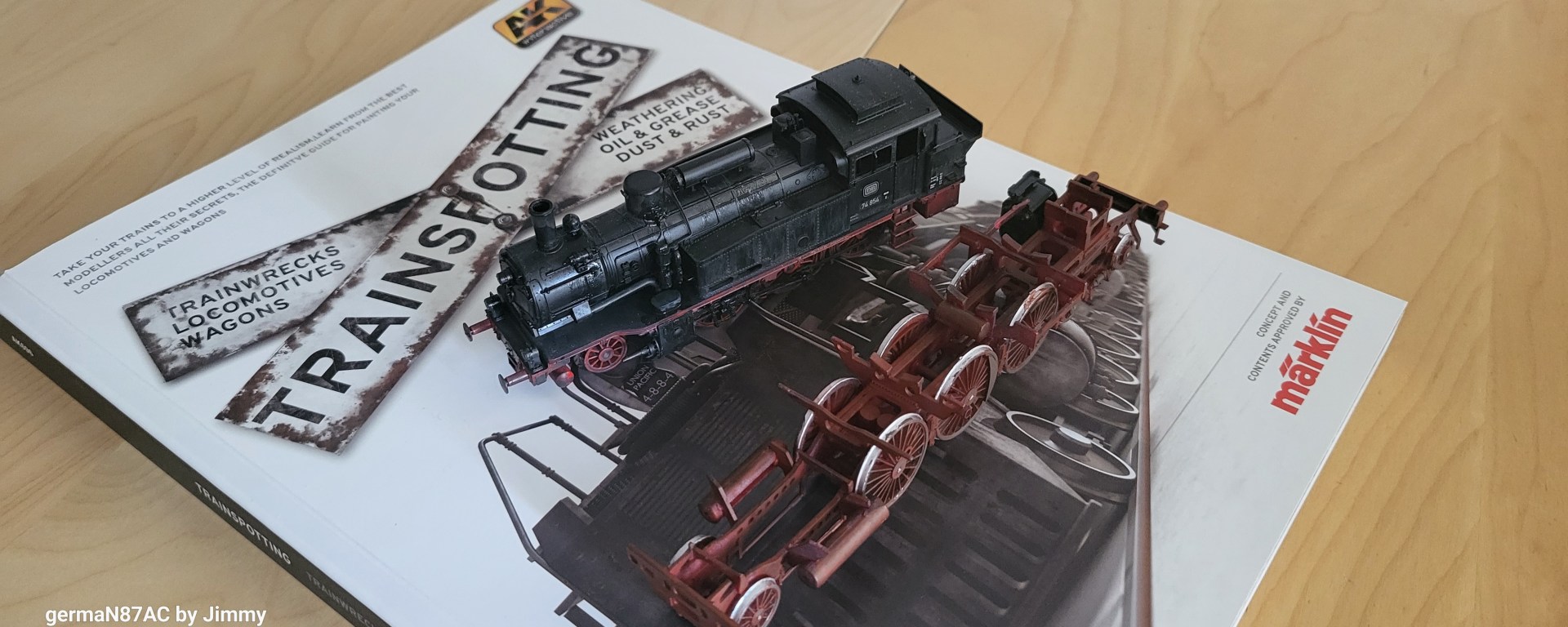
Many of us enjoy trainspotting – watching and perhaps noting down the various equipment – locomotives, wagons and even trains that passed by or at stations. This “trainspotting” hobby probably started in the 1950s in UK when schoolgoing kids noted down the passing locomotives in their little notebooks. Today. we use our smartphone or camera to capture photos of trains and scenaries.
The aim is not only to note down the rolling stocks that we sighted (that’s the primary purpose of trainspotting) but nowadays to capture parts of the rolling stocks and trackside scenaries for references. I enjoying taking photos with my smartphone and looking back, these served as great references for my model weathering projects.
Thanks to JC’s Riptrack (YouTube Channel) for recommending this awesome AK Interactive book on painting and weathring called “Trainspotting“. I commend AK Interactive for taking this initiative with Märklin to tap an underexplored opportunity in the model railroading market. Model weathering has been around for ages but the application in model railroading is still limited. The hardcore modellers do go into lengths to bring realism into their miniature world. The results are absolutely fascinating.
A single book can hardly gather all aspects that would appeal to each and every model railroader and enthusiast; however, here at AK Interactive we will try and give you a chance to see what is possible!
Introduction from “Trainspotting” book (2016)
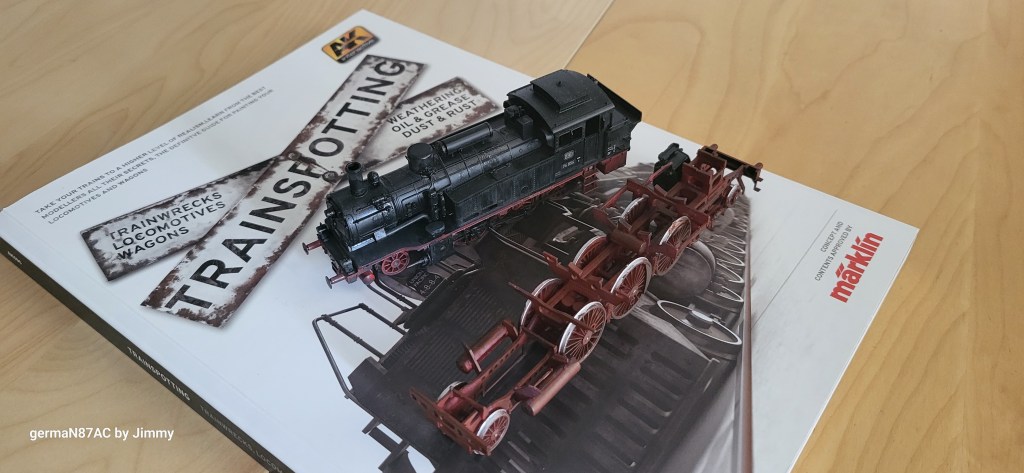
This 208-pages soft-cover book is available in English and Spanish and contains useful step-by-step pictorial guides on various weathering techniques on locomotives, passenger and freight cars and scenaries from US, German. Spain and etc. These techiques can be applied on any model railroad of your choice and era.
Chapter 1 gives a quick introduction to various media for weathering such as primers, varnishes, acrylics, pigments, etc. As this book is about weathering, AK Interactive did justice by introducing the media what we can use as well as from various manufacturers. For beginners like myself, I learned more about the media I could use, their characteristics as well as which manufacturers make better medium. Therefore, the contributors in the book make recommends and make use of suitable tools for the techniques, not necessary AK Interactive-only products. Find the best tool for the work. As a result, we can learn how to, for example, apply washes. Some of us like Vallejo or AMMO by Mig washes. Use them. The techniques matter, and we can learn from this book as well as from other similar books or videos.

Other chapters cover step-by-step pictorial guides on weathering techniques. I have identified a few locos and cars that I want to practise the weathering techniques from this book.


If you are beginner, that I recommend you check out this book as well as JC’s Riptrack and other channels. I have a separate section on my Weathering projects.
 germaN:87AC :: Steam Experience Across Germany