
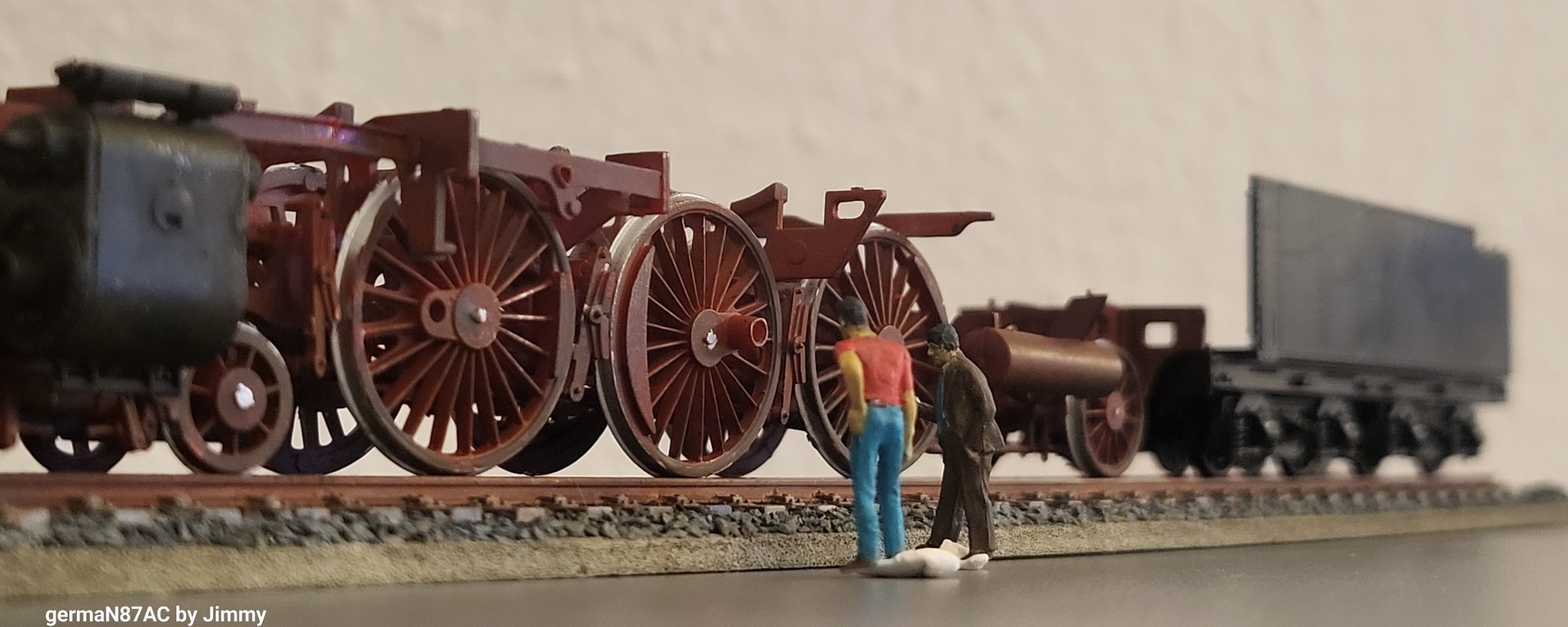
I always wanted to model a cut-out locomotive, similiar to the steam loco Merchant Navy no. 35029 Ellerman Lines at National Railway Museum in York. It was an impressive machine and was brave of the National Railway Museum to cut out one for educational purposes.

I am not aware of similar cut-out German locomotives. The closest cut-out was a steam loco Baureihe (Class) 50 boiler at Eisenbahnmuseum Darmstadt-Kranichstein.
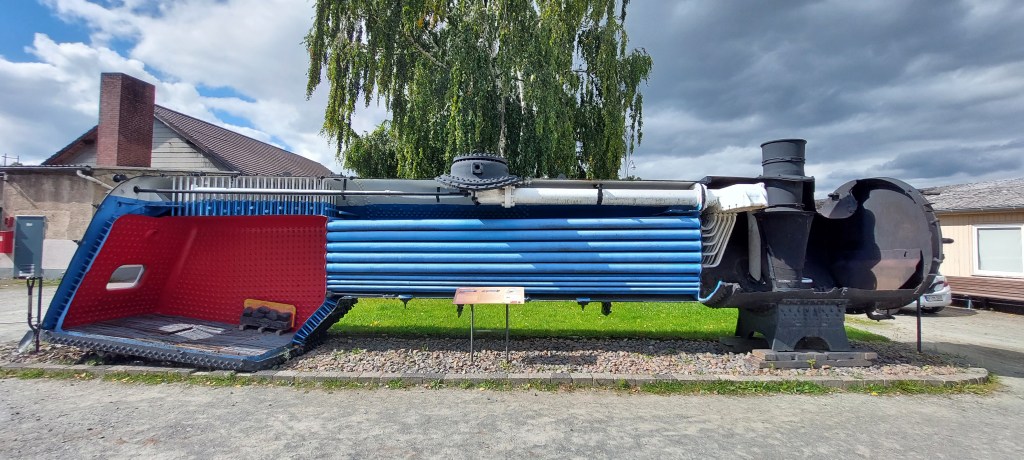
Meticulous Planning Required
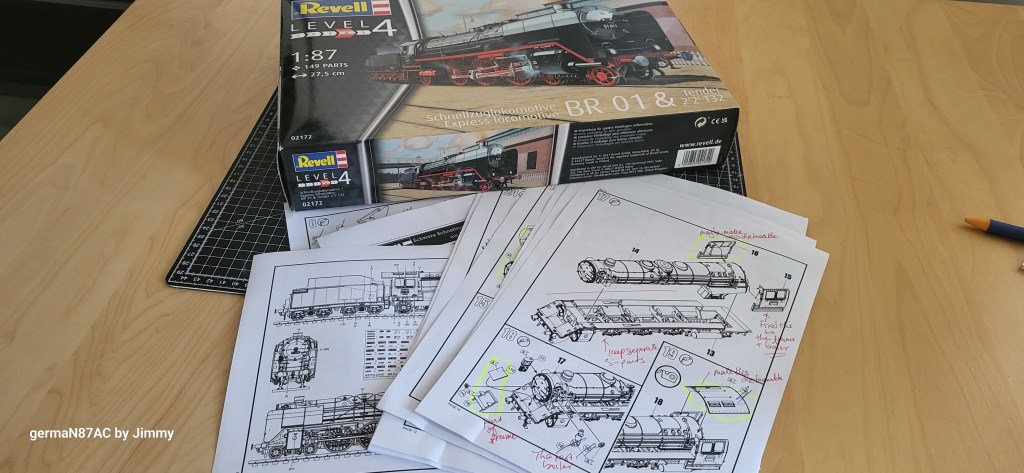
I was deciding whether to buy a pre-owned steam locomotive model from Märklin or Roco and cut them or use Revell kit. In the end, I went for the cheaper alternative but with fine details that I could work on. Unlike other modellers who follow the assembly instructions as per the kit, I had to meticulously plan which components to exclude from the final model and how to cut out the required section. You will notice lots of markings and remarks on the instruction sheets that require careful thought-through.
Undercarriage Frame Assembled

Assembling this frame requires a lot of patience and a steady hand. At this junction, it was relatively easy to assemble and glue them as there are less smaller parts.

Removing the Shiny Plastics

With the undercarriage frame completed, it is time to give it a layer of paint. I applied Vallejo Surface Primer Black to coat the plastic for better paint adhesive. Then I airbrushed Vallejo Model Air Fire Red (note to self: DO NOT use black primer with warm colors such as red). Instead of red underframe, it turned out brown, which unexpectedly gave the rustic look. As this model is on an outdoor-display (versus the real-life loocomotive in York), this rustic look may in the end be the right tone. Sometimes, such “accidental mistake” maybe a blessing.
First Impressions
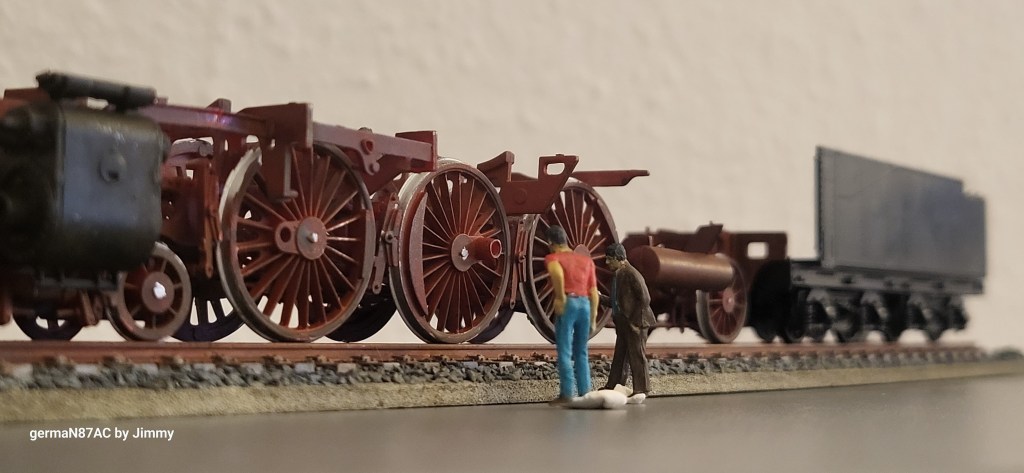

It looks pretty awesome, don’t you think so?
 germaN:87AC :: Steam Experience Across Germany