

All this while I have been using acrylic paints with paint brushes to paint and weather my models, figures and tracks. Recently I got a handheld airbrush compressor and this gives me more flexibility to setup my tool for airbrushing. I found the handheld useful for an 1-hour weathering work in the evenings.
Preparing a Railway Track for Loewenherz
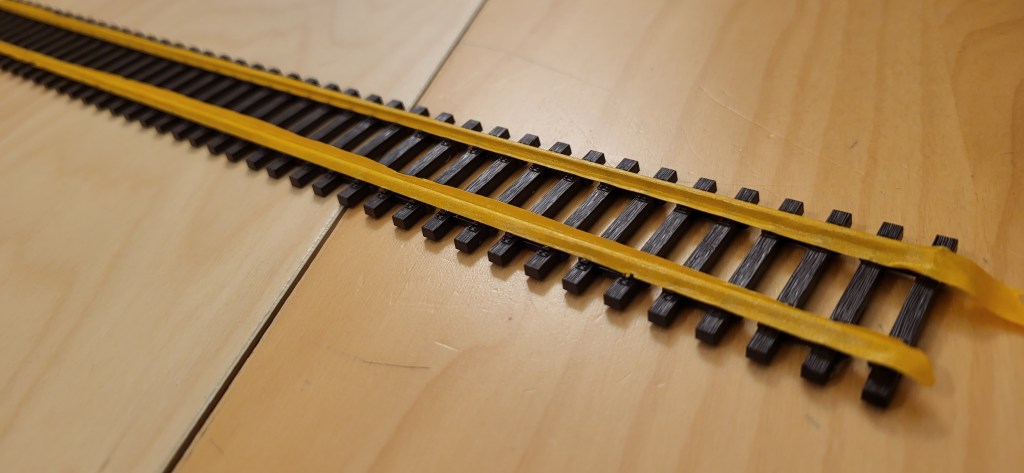
I cut a 29cm piece of Roco flex track with wooden sleepers for the exhibition track. The purpose of this track is to hold any rolling stock for display at the Loewenherz railway park. I used Tamiya masking tape to cover the rails before painting the wooden sleepers.
Airbrushing the Wooden Sleepers
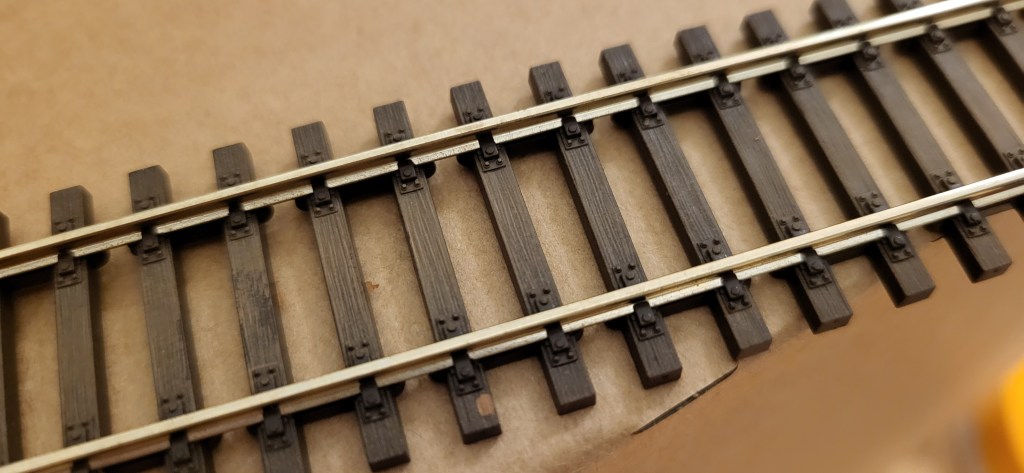
I mixed Vallejo Model acrylic paint Wood Grain with Sand Yellow and lightly airbrushed over the sleepers. You can see the effect of aged sleepers. Using airbrush versus paint brush preserves the fine details on the sleepers.
Drybrushing the Wooden Sleepers


Next I used Vallejo Model Deck Tan and lightly drybrushed over the sleepers. Dip the brush into undiluted paint and removed excess paint. It is like applying a foundation on face (I hope you can understand what I meant). The purpose of drybrushing is to lightly bring out the fine details by way of contrasting.
Rusting the Rails
All this while I have been using paint brush and acrylic paint Rust to weather the rail webs. If the purpose is to remove the nickel sliver shine on the rail webs, it probably works fine.
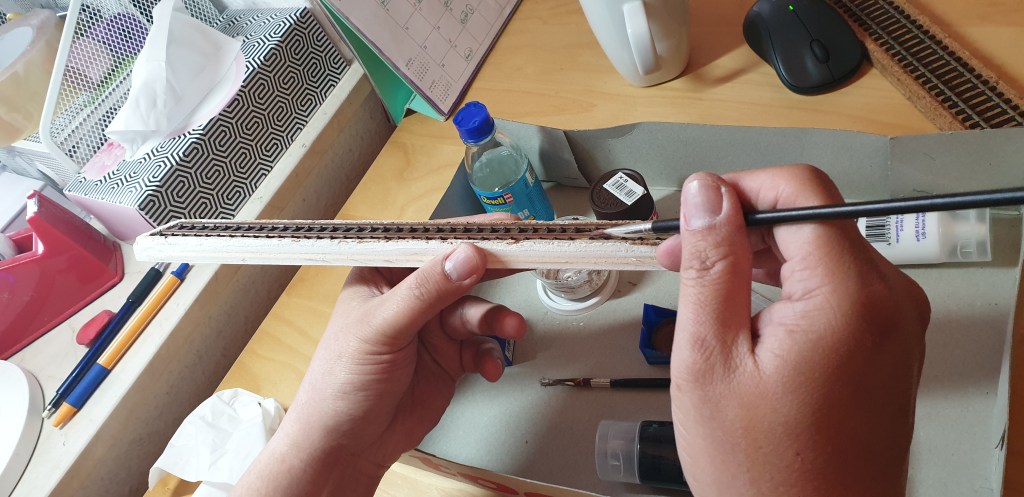

I experimented with airbrushing Rust and Hull Red acrylic paints. The effect below shows how fine rust builds up on and around the rail. If the rails are more element-beated, then you can apply more along the rails or at certain spots.
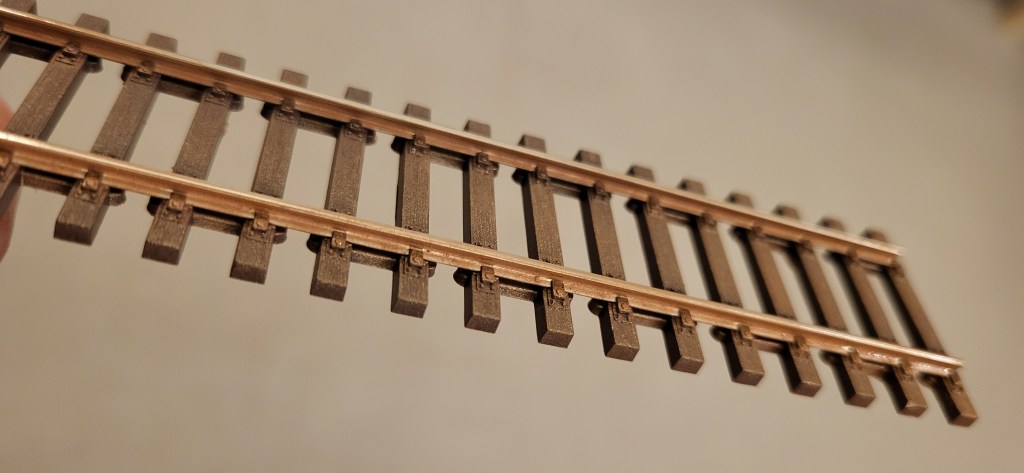
I am happy with the weathering. It can be improved for example using pigments to weather the rails and sleepers further and blend to the environment. There is always a small project to do.
 germaN:87AC :: Steam Experience Across Germany