

I have been following a few Facebook groups and YouTube channels on building dioramas and weathering. Those who do tabletop modelling for wargames (1/35 scale) really make impressive models. I want to apply their techniques on my 1/87 modules, which mean 60% smaller (yes!) than what they make.
Extruded styrofoam (XPS / Styrodur) is an easier material to work with then expanded styrofoam (EPS / Styropor), which are the white, beaded foam that comes in electrical device packaging. XPS is used for building insulation and comes in densed foam. Lightly carve out each stone on the XPS.
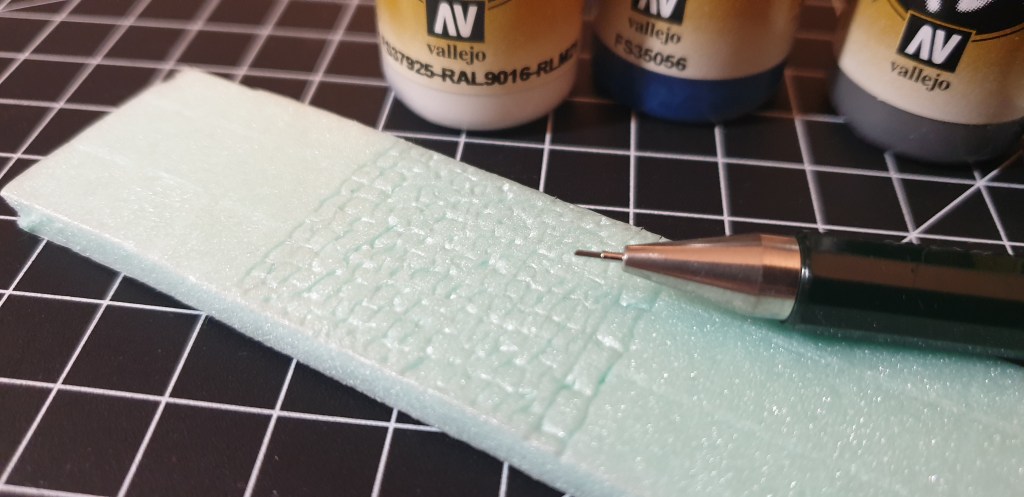
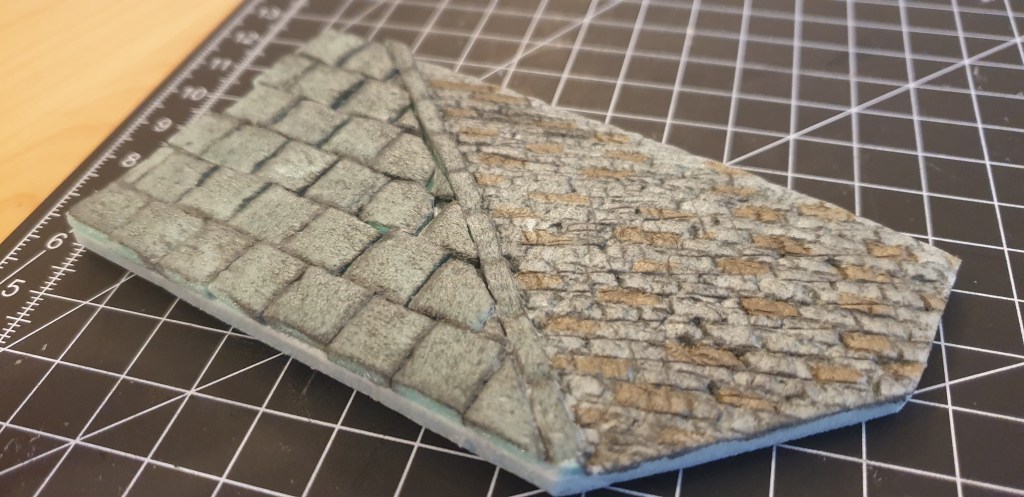
I found the commercial templates look too standardized and do not capture the look-and-feel that I want to achieve. Using a mechanical pencil and ruler, I carved individually each cobblestone.

With some weathering, the stones become alive (Foto: Jimmy Low (c))
With Vallejo Model Air paints, I brought the carved cobblestone to live. On this test piece, I tried out various sizes of cobblestone and concrete pavement.
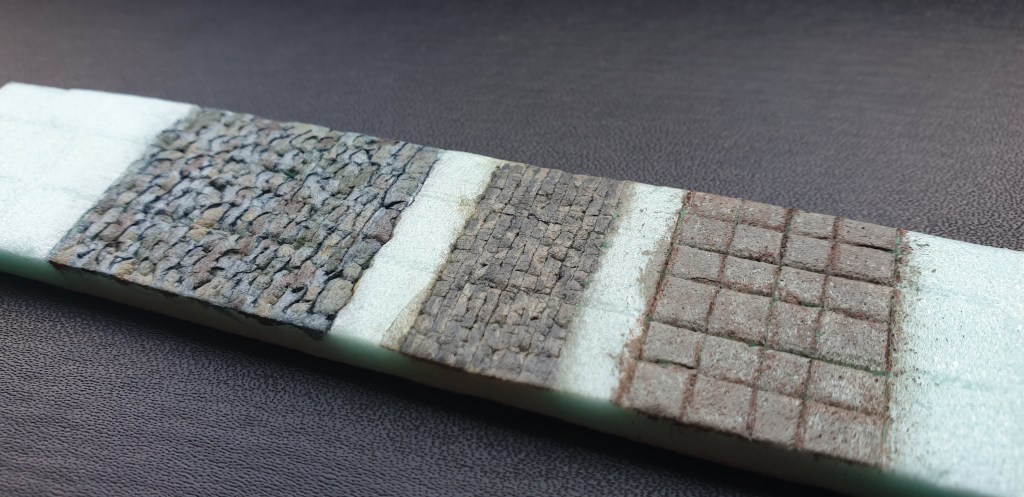
2 types of cobblestone roads and a concrete pavement (Foto: Jimmy Low (c))
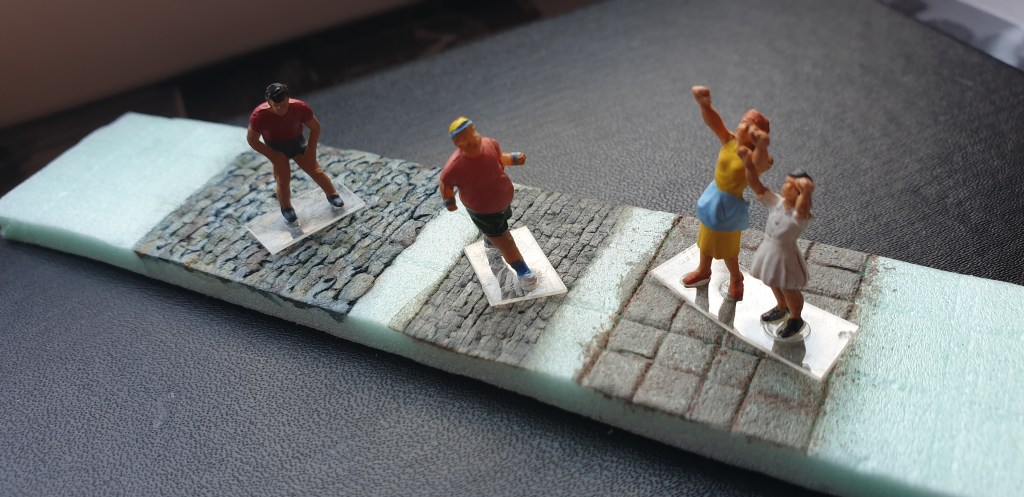
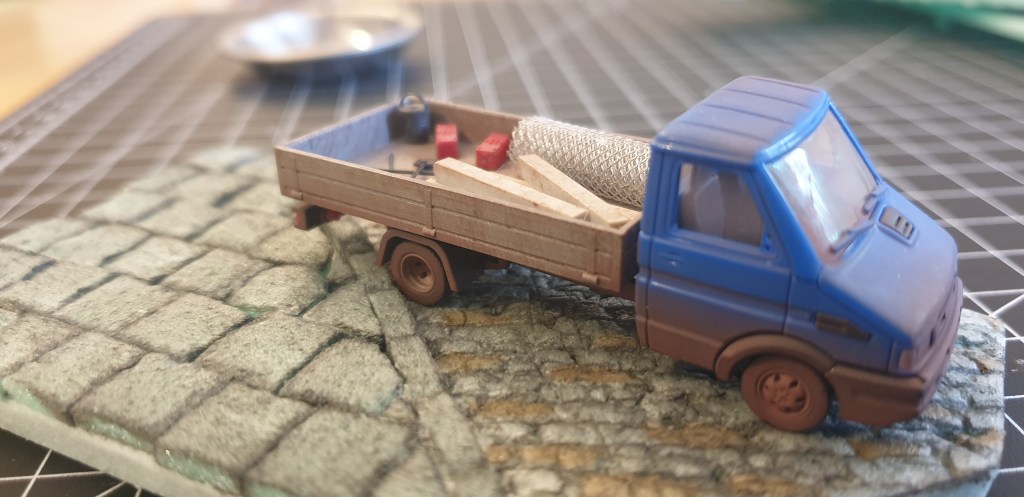
I used a 1/87 vehicle and figures to check the proportion.

Checking the proportion with 1/87 vehicle (above) (see the tyres) and 1/87 figures (below) (see the feet)
Happy with the results, I proceeded making a section of a road, combining cobblestone road and concrete pavement. The cobblestone are carved directly on the XPS whereas the pavement is individually laid. I used a wooden tool to create rough texture on the road and pavement (alternatively use a crumpled ball of aluminium foil)
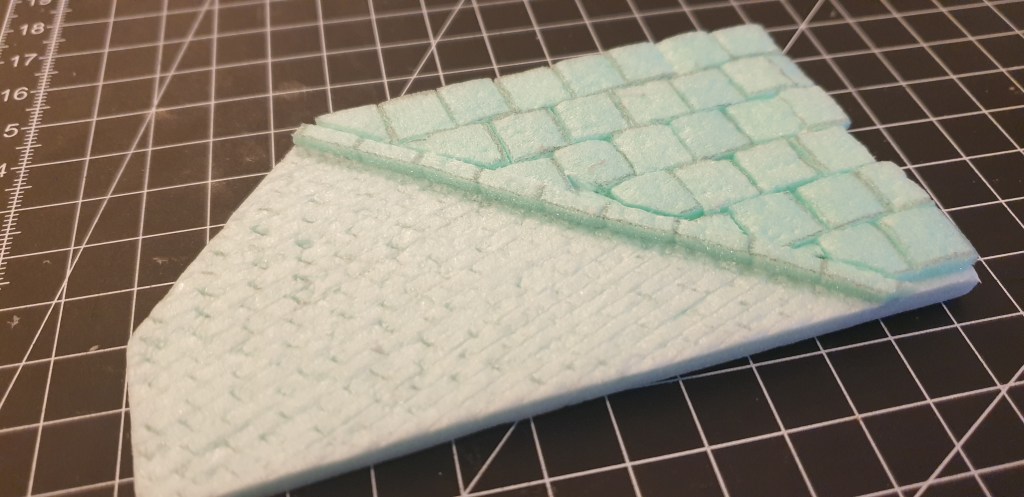
Now I can transfer this result to my modules.
 germaN:87AC :: Steam Experience Across Germany