

So far, I have never been a fan of “snap-on” tracks. To me, they look plastic-ky and toy-ish on a layout. On my N-scale layout, I used Peco flex-tracks and streamline turnouts, which mean lots and lots of effort in placing the tracks and ballasting. That’s one of the fun parts of model railway (also the headache, if you do not do it right the first time)
As I explore more about Märklin AC system, I learned more about their track system. During a recent Märklin operating session, I took particular attention on how the Märklinists use C-tracks (dt. C-Gleise) and K-tracks (dt. K-Gleise). When the ballasting is done well, you won’t notice the plastic-ky look of the C-Gleise.
Märklin currently offers 2 types of 3-rail track: C-Gleis with plastic roadbed (C for “Click” as you snap them together or take them apart) and K-Gleis without roadbed (K for “Kunststoff” (plastic)). The M-Gleis (M for “Metall”) comes with metal roadbed but is not longer available via Märklin. You can still get M-Gleise from model railway flea markets. I learned that between 1969 and 1992, Märklin offered supermarket brand train sets and metal tracks under the brand name “Primex“. Both Märklin and Primex systems are fully compatible.

I bought 3 Märklin/Primex tracks and decided to do a comparison.
Overall Appearances
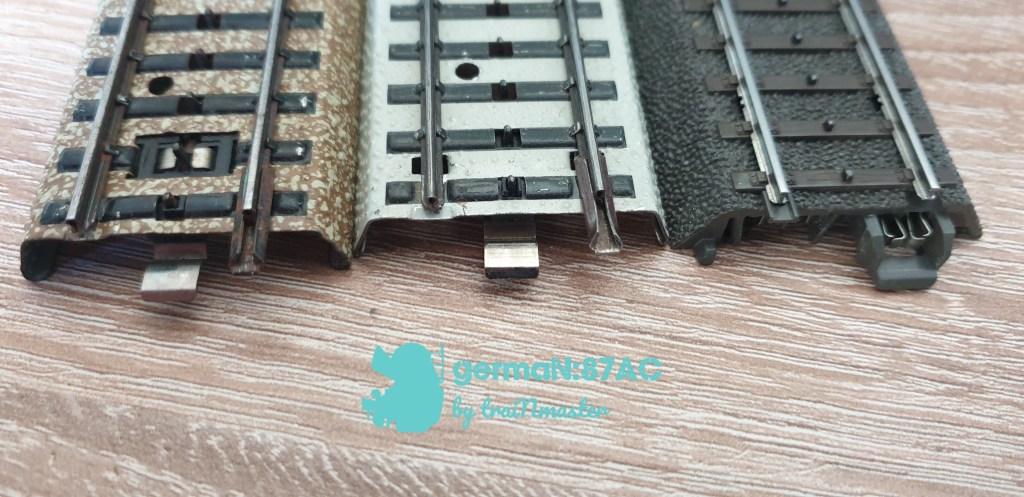
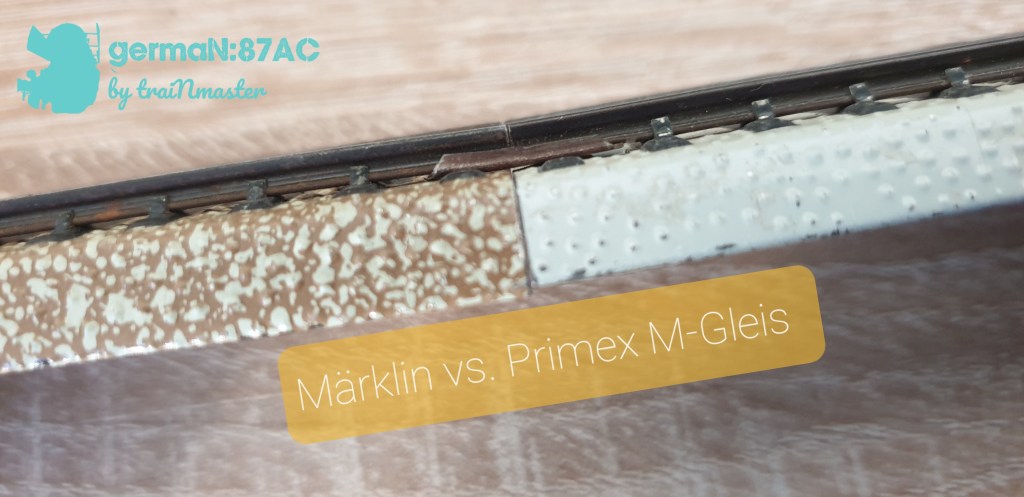
Märklin M-Gleis has brownish metal roadbed with white spots to resemble ballast where as C-Gleis is completed dark gray plastic. It is interesting to note that Primex M-Gleis looks overall like M-Gleis except for the white gray metal roadbed.

Thickness
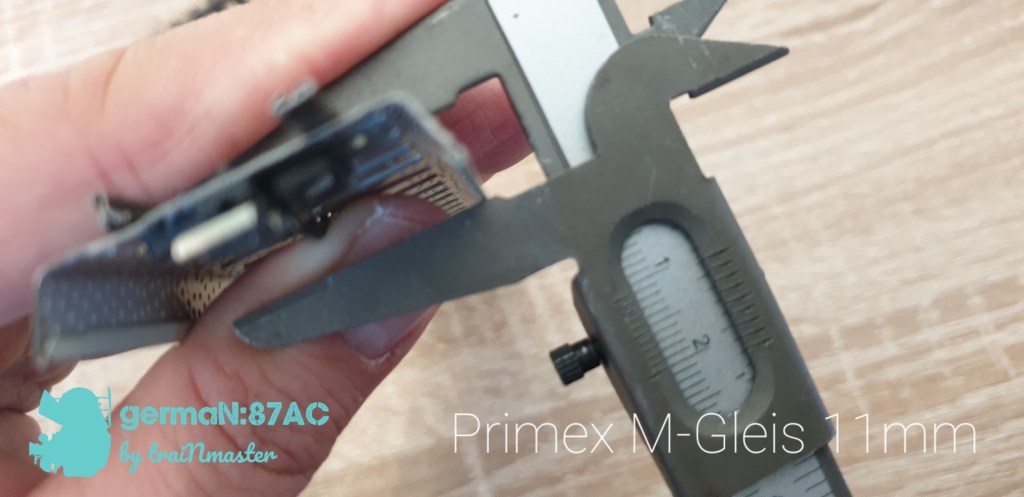
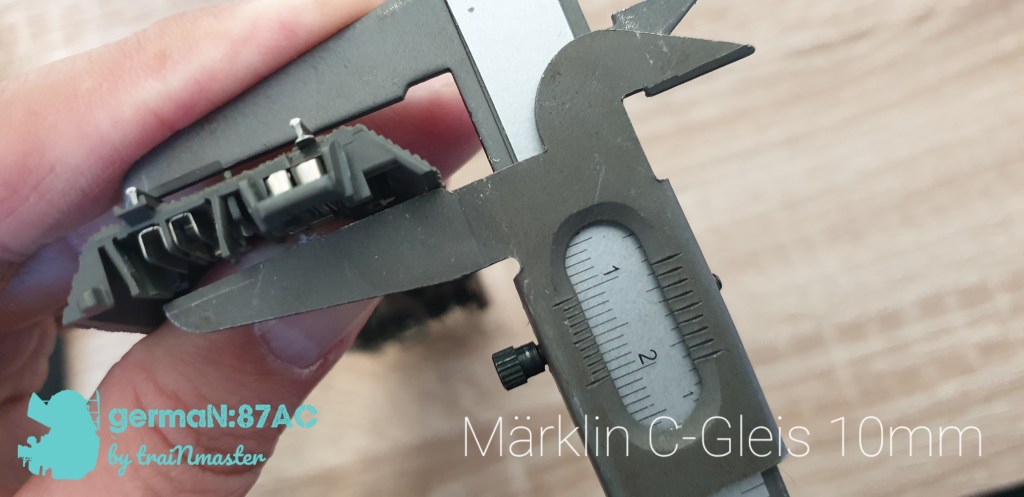
From top of the rail to bottom of the roadbed, their measurements vary. In particular, Märklin and Primex M-Gleis thickness vary by 1mm (probably not noticeable for many)

Appearance on a Layout
You can find many examples of Märklin layouts with M-Gleis on the internet. Here I want to show the appearance of C-Gleis.
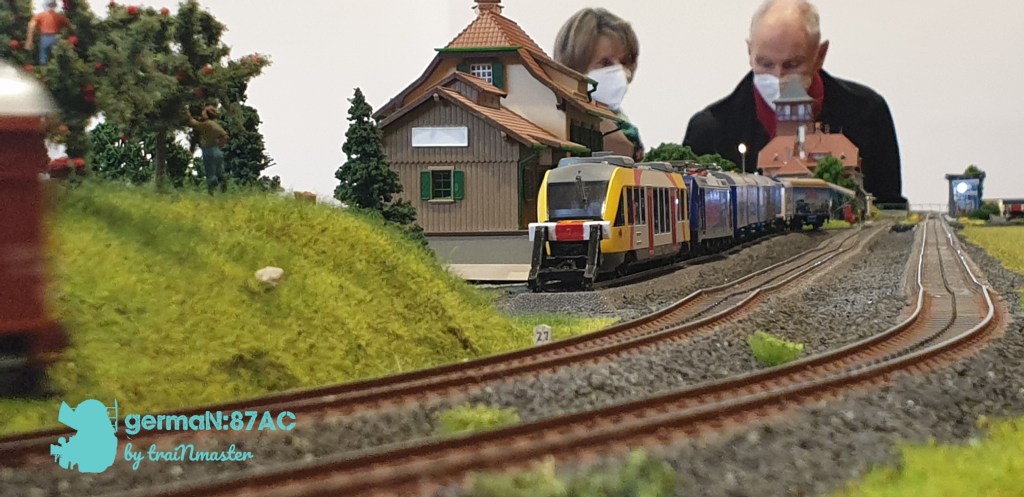

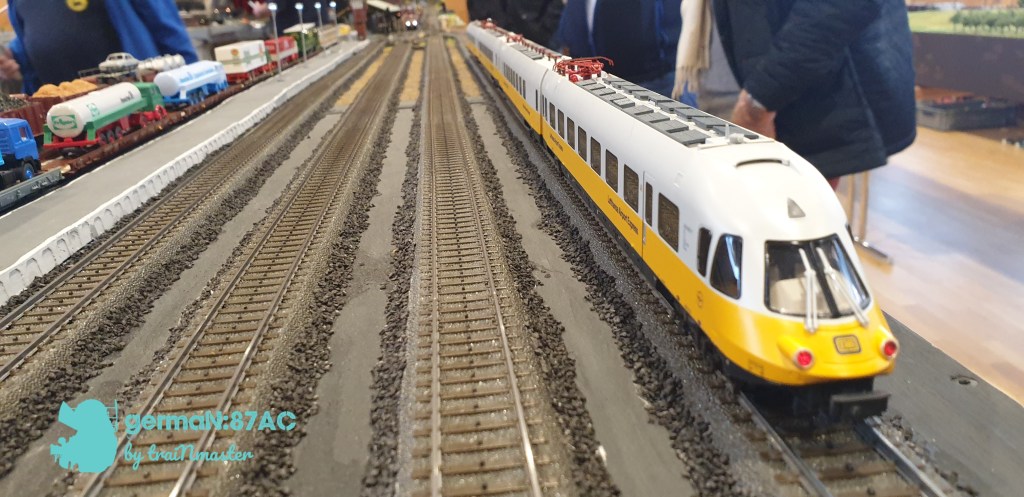

I think I have now another perspective of “snap-on” tracks.
 germaN:87AC :: Steam Experience Across Germany